
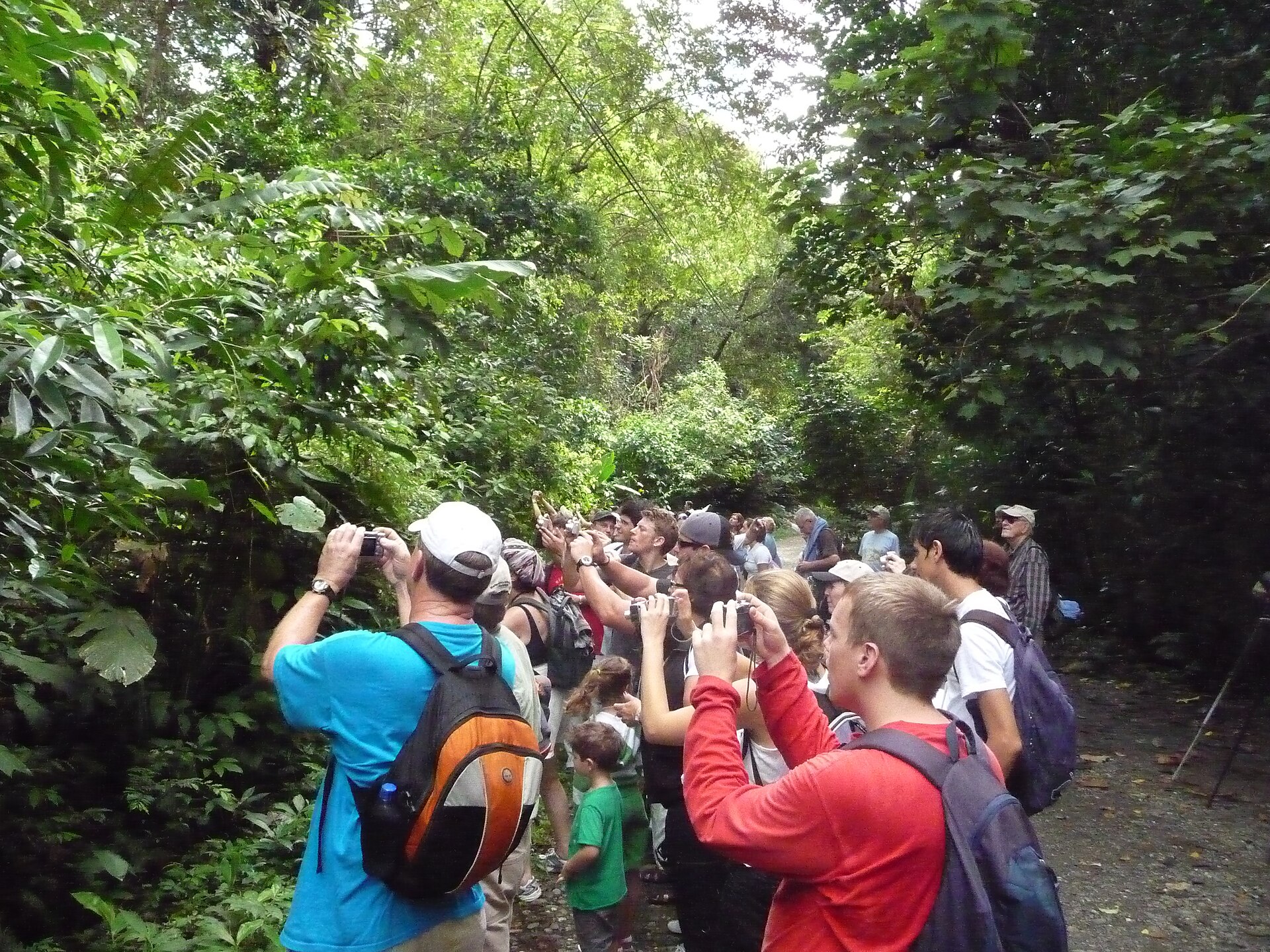
It is easy to arrive in Guanacaste thinking first about the ocean. The forest deserves an afternoon of its own. Much of this part of Costa Rica is tropical dry forest, an ecosystem whose appearance shifts dramatically between drier and wetter months. The change in light, color and wildlife activity makes even a familiar trail feel new.
A different kind of tropical landscape
The dry forest is not always the dense, dripping green that visitors associate with other parts of the country. Some trees lose leaves during the dry season, opening up views and bringing attention to bark, branches and the birds moving between them. When rains return, the landscape becomes richly green again.
Watch, listen and keep your distance
Birdsong often gives away wildlife long before you see it. Depending on the location and time of day, you may encounter monkeys, iguanas or a remarkable variety of birds. Observe from a comfortable distance, avoid feeding animals and let a qualified naturalist point out what is easy to miss. Wildlife encounters are never guaranteed, which is part of the pleasure of exploring a living ecosystem.
Consider a guided excursion
Peninsula nature walks can introduce visitors to local plants and animal behavior. For a longer excursion, Rincón de la Vieja National Park offers a different inland setting where forest, trails and volcanic features shape the experience. Park access, trail conditions and any volcanic safety restrictions should be confirmed before traveling.
Return with fresh eyes
After a day exploring, the garden around your villa may look entirely different. Notice the changing bird calls in the evening, the movement of lizards along a stone wall and the way the forest settles at sunset. Often the memorable moments are the quietest ones.
Plan a nature-focused day with the Green & Gold team, then come home to the villa that fits your group.
Featured photograph: Patrick Nouhailler · CC BY-SA 2.0. Display sizes may be reduced.